
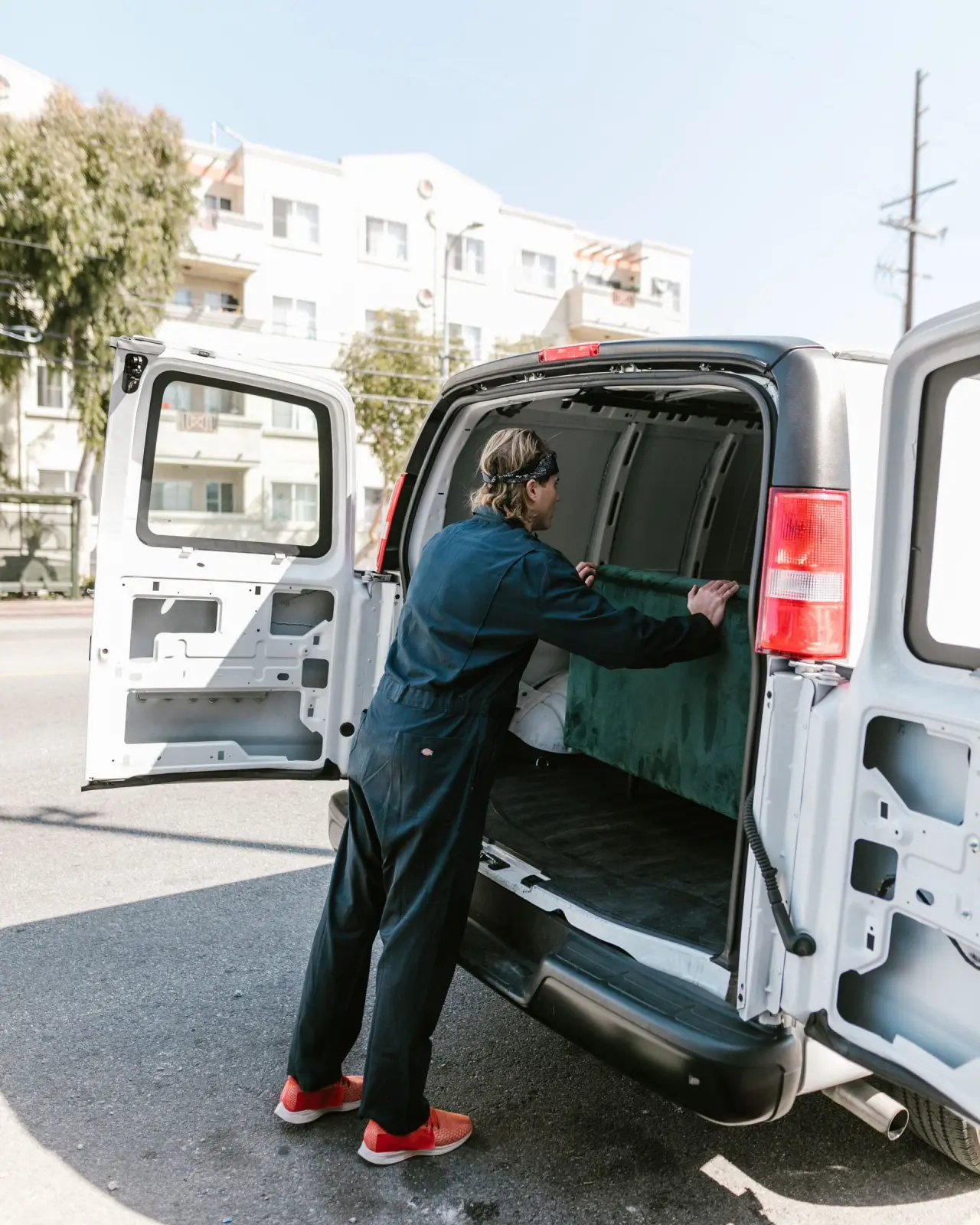
Cargo vans
Plumbers, electricians and HVAC techs with shelving and parts in the back.
Commercial auto insurance for contractors covers the vans and pickups you drive for work, the people who drive them, and the damage they cause on the road. In Texas, a work vehicle under 26,000 pounds that stays in state doesn't need a DOT number, and our quote doesn't ask for one.
Somra Insurance Agency quotes contractor vans and pickups with GEICO, Progressive and other carriers. Call 281‑766‑0619, or send the short form. It's one piece of our contractors insurance lineup.
Personal auto policies are written for commuting and errands. Once the truck hauls tools, materials or a trailer to paid jobs, or it's titled to the business, or employees drive it, many personal policies can deny the claim. Driving to one job site now and then is a gray area. Driving the truck for work every day isn't.
The fix is a commercial auto policy in the business's name. It lists the vehicles, lists the drivers, and pays for the damage they do while working. It also gives the GC something to put on the certificate, since many contracts ask for commercial auto liability of $1,000,000.
A lot of quote forms ask contractors for a DOT number they don't have. Here are the rules. In Texas, TxDMV requires a motor carrier number for vehicles over 26,000 pounds, for hazmat loads that need placards, and for vehicles built to carry more than 15 passengers. A cargo van, a 1500, 2500 or 3500 pickup, or a small box truck under 26,000 pounds working inside Texas doesn't need a TxDMV number.
Federal rules are about crossing state lines. A work vehicle over 10,000 pounds that travels interstate for business generally needs a USDOT number. A cargo van under 10,000 pounds doesn't. A 3500 pulling a trailer to a job in Oklahoma can cross that line once you add the trailer weight.
Tell us what you drive, what you tow and where you go. We'll tell you which rules apply before you spend money on a number you may not need.
A contractor's auto policy is built from a few coverages.
Liability is required by Texas law. The rest depends on your trucks and your contracts.
Most contractor vehicles fall into one of these groups.
Fleets of several vehicles go on one policy with one renewal date.
Plumbers, electricians and HVAC techs with shelving and parts in the back.
Including trucks with ladder racks, toolboxes and service bodies.
For remodelers, movers of materials and delivery work inside Texas.
Landscapers and GCs towing equipment. We list the trailer so it's covered too.
Every person who drives your work vehicles regularly goes on the policy. The carrier checks each driver's record, and each one affects the price. A crew member with a recent accident or a DWI can raise the premium more than any truck. If someone's record makes the policy hard to place, we can exclude that driver so the rest of the business stays affordable, as long as they stay out of the driver's seat.
The vehicle's title matters too. A truck titled in your personal name but used for the business can still go on a commercial policy, and a truck titled to the LLC belongs on one. Financed trucks need physical damage coverage, and the lender is listed on the policy so they get paid if the truck is totaled.
Adding a new truck mid-year is a call. Send the VIN and we add it the same day in most cases, so it's covered before it goes to work.
Insureon, Texas general contractors, commercial auto
Insureon reports that Texas general contractors who bought through its platform paid an average of $254 a month for commercial auto. Your number can be well above or below that.
The biggest factors are the drivers: ages, years licensed, tickets and accidents. After that come the vehicles and their values, where they're parked at night, how far they go, and the liability limit your contracts ask for.
One driver with a DWI can double the price of a policy. Taking a high-risk driver off the policy, or choosing a higher deductible on physical damage, are the two quickest ways to bring it down.
We quote your trucks and drivers with more than one carrier and show you the difference, so you can pick on value, not only price.
A few changes make a real difference on a contractor's auto bill.
We go through them on every quote.
Call us after you've called the police and made sure everyone is safe. Take photos of both vehicles, the scene and the other driver's license and insurance card. We report the claim to the carrier with you and follow it until it closes. A work truck out of service costs you jobs, so we push to get the repair or the check moving.
If the other driver was at fault and has no insurance, your uninsured motorist coverage steps in. If a GC needs proof that the claim is being handled, we can send that too.
Claims also show up at renewal. One at-fault accident usually stays on a commercial policy's record for three to five years, depending on the carrier. That's one more reason we shop every renewal: a carrier that forgives one claim may beat the one that surcharges it.
Send the year and model of each vehicle, the drivers, and your ZIP code. No DOT number needed. Or call 281‑766‑0619.